
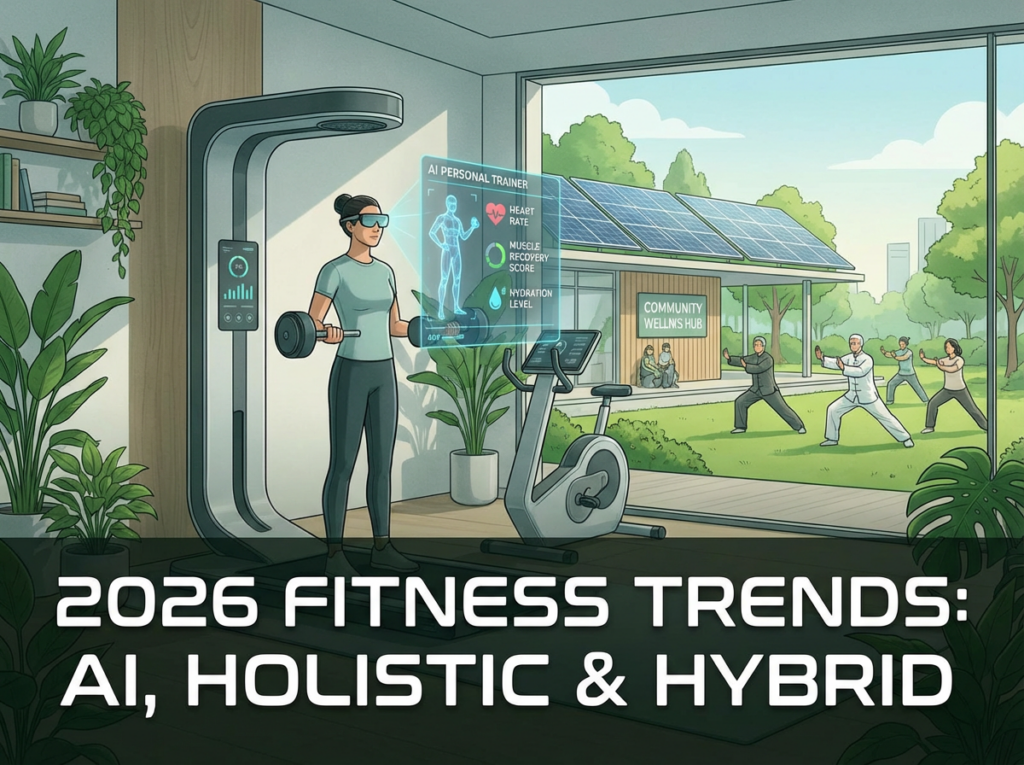
2026 Fitness Industry Trends: Strategic Investments for Commercial Growth
The commercial fitness landscape is no longer defined merely by membership volume; it is defined by efficiency, retention, and asset optimization. As we approach 2026, the “post-pandemic recovery” phase is officially over. We have entered an era of technological integration and operational scrutiny.
For gym owners, facility managers, and corporate wellness directors, the focus has shifted from buying the newest gadgets to investing in ecosystems that lower the Total Cost of Ownership (TCO) while maximizing member lifetime value.
This report outlines the five critical trends shaping the B2B fitness market in 2026, focusing on ROI, equipment durability, and commercial viability.
The Rise of “Predictive Maintenance” and Smart Asset Management
By 2026, the tolerance for “Out of Order” signs will be zero. In a commercial setting, a broken treadmill isn’t just a mechanical failure; it is a retention leak. The industry is moving rapidly toward IoT-enabled equipment that facilitates preventative maintenance.
Commercial equipment is increasingly shipping with internal sensors that monitor motor heat, belt friction, and usage mileage. These machines communicate directly with facility management software to flag maintenance needs before a breakdown occurs.
Reduced Downtime:Fixes happen during off-hours before the machine fails.
Lifespan Extension: Proactive servicing extends the usable life of commercial cardio and strength assets by an estimated 20–30%.
Staff Efficiency: Facility managers spend less time troubleshooting and more time on member experience.
The “Recovery-First” Floor Plan
High-intensity training remains popular, but the highest growth sector for 2026 is active recovery. Commercial facilities are redesigning floor plans to reduce square footage for cardio rows and increase space for recovery zones. This includes percussion therapy stations, cryotherapy chambers, infrared saunas, and assisted stretching areas.
- Higher Perceived Value:Recovery amenities allow commercial gyms to justify premium membership tiers without significantly increasing labor costs.
- Lower Wear-and-Tear: Recovery equipment generally has fewer moving parts and lower impact usage than heavy cardio machinery, resulting in lower long-term maintenance costs.
- Retention Anchor: Members may skip a workout, but they rarely skip a recovery session, keeping usage rates steady.
Hybrid Ecosystems: Integrating Digital with Brick-and-Mortar
The “Gym vs. Home” war is over; the hybrid model won. However, for the Business sector in 2026, this means creating a Connected Fitness Ecosystem. Members expect their commercial gym equipment to sync seamlessly with their wearables (Apple Watch, Garmin, Whoop) and their personal data clouds.
Siloed equipment is obsolete. 2026 trends point toward open-API equipment that allows members to log in via NFC (Near Field Communication) or Bluetooth to instantly upload workout data, preferences, and seat settings.
The B2B ROI: Data-Driven Decisions: Facility managers can access aggregated, anonymized data to see exactly which machines are used, for how long, and at what intensity.
Optimized Purchasing: Stop buying equipment based on “feel.” Use data to determine if you need more squat racks or more ellipticals based on actual traffic flow.
Sustainability as a Cost-Control Mechanism
Sustainability in 2026 is less about PR and more about P&L (Profit and Loss). With commercial energy rates fluctuating, fitness facilities are turning to self-powered and energy-efficient equipment.
Lower Utility Bills: Replacing a fleet of 50 motorized treadmills with non-motorized or energy-efficient alternatives can save thousands annually in electricity.
Infrastructure Savings: Reduces the need for extensive under-floor wiring and electrical outlets, lowering facility build-out costs.
Corporate Wellness 2.0: The Medical Fitness Convergence
Corporate wellness is shifting from “perks” to “preventative healthcare.” Companies are looking for facility partners that can provide measurable health outcomes. In 2026, commercial gyms are outfitting spaces to accommodate **Medical Fitness** standards—equipment that is safe for deconditioned users, seniors, and those in rehabilitation.
The integration of selectorized strength equipment with AI coaching that ensures safe range of motion. This minimizes liability and opens the facility to a broader demographic beyond the “fit minority.”
To thrive in the 2026 market, commercial facilities must view equipment not as a cost center, but as a sophisticated asset class.
The winning strategy involves:
1. Durability: Prioritizing industrial-grade build quality over consumer-grade gimmicks.
2. Connectivity: Ensuring equipment integrates with the wider digital health ecosystem. 3. Serviceability: Investing in brands with strong supply chains and predictive maintenance capabilities.
In 2026, the most successful fitness businesses will be those that use technology to reduce friction, reduce downtime, and reduce operational costs, all while elevating the member experience.