
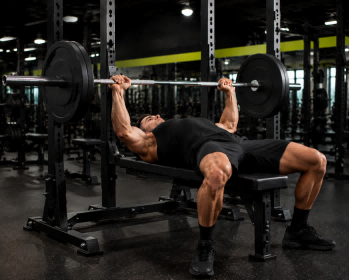
The bench press is one of the most popular and effective strength-training exercises in the world. Whether you’re a beginner building foundational strength or an experienced athlete aiming to increase upper-body power, the bench press remains a cornerstone of nearly every successful workout program.
By targeting multiple upper-body muscle groups simultaneously, the bench press helps improve strength, muscle mass, athletic performance, and overall functional fitness. In this guide, you’ll learn everything you need to know about the bench press, including muscles worked, proper technique, common mistakes, variations, and expert training tips.
What Does the Bench Press Work?
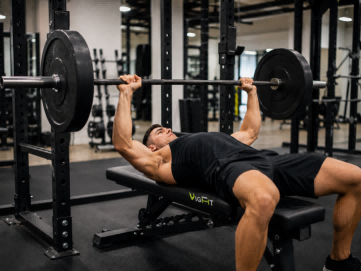
The bench press is a compound upper-body exercise that primarily engages the pectoralis major, anterior deltoids, and triceps brachii. A peer-reviewed electromyographic study examined the activation of these three muscles during horizontal bench press variations, providing scientific support for their central role in the movement.
Primary Muscles Worked
Pectoralis Major (Chest)
The pectoralis major is the primary muscle activated during the bench press. It is responsible for pushing the weight away from the chest and plays the biggest role in generating pressing power. Regular bench press training helps develop a stronger, fuller, and more defined chest.
Triceps Brachii
Located on the back of the upper arms, the triceps assist with elbow extension during the pressing motion. They are particularly active during the lockout phase when the arms reach full extension.
Anterior Deltoids (Front Shoulders)
The anterior deltoids help lift and stabilize the weight throughout the movement. Strong front deltoids contribute to improved pressing performance and overall upper-body strength.
Secondary Muscles Worked
Latissimus Dorsi (Lats)
Although not primary movers, the lats help control the descent of the barbell and provide stability during the lift.
Rhomboids and Trapezius
The upper back muscles work to keep the shoulder blades retracted and maintain proper posture throughout the exercise.
Rotator Cuff Muscles
These small shoulder stabilizers help support the shoulder joint and contribute to safe, controlled movement.
Core Muscles
The abdominal muscles and lower back engage to stabilize the body and maintain proper positioning on the bench.
Complete Bench Press Setup: Equipment and Accessories Explained
One of the biggest advantages of the bench press is its simplicity and effectiveness. Whether you’re training in a commercial fitness facility or building a home gym, the bench press requires only a few essential pieces of equipment to deliver impressive strength and muscle-building results.
Essential Bench Press Equipment
Sturdy Weight Bench
A high-quality weight bench is the foundation of any successful bench press setup. Choose a bench with a weight capacity that matches your training level and supports your long-term strength goals. Features such as thick padding, durable steel construction, and adjustable backrests can improve comfort, stability, and exercise versatility. Whether you perform flat, incline, or decline bench presses, a reliable weight bench is crucial for safe and effective training.
Barbell or Dumbbells
Both barbells and dumbbells are excellent tools for bench press workouts. A barbell bench press allows you to lift heavier loads and progressively increase strength, making it ideal for muscle growth and power development. Dumbbell bench presses provide a greater range of motion, improve muscular balance, and engage stabilizing muscles throughout the movement. Including both options in your strength training routine can help maximize upper-body development.
Weight Plates
If you’re using a barbell, you’ll need weight plates to customize resistance and support progressive overload. Olympic weight plates and bumper plates are popular choices for both home gyms and commercial training facilities. Selecting high-quality weight plates ensures durability, safety, and long-term performance.
Safety Equipment and Spotting Support
Safety should always be a priority when performing heavy bench presses. A power rack or squat rack equipped with adjustable safety spotter arms provides added protection and confidence during training. If a rack is unavailable, training with an experienced spotter can help reduce injury risk and improve lifting safety, especially when attempting heavier loads.
Build a Complete Bench Press Station
For the best training experience, consider combining a commercial-grade weight bench, Olympic barbell, weight plates, and a power rack to create a complete bench press station. This setup not only improves safety but also supports consistent strength gains, muscle growth, and long-term fitness progress.
How to Do a Bench Press: Step-by-Step Guide
Performing the bench press with proper form ensures maximum muscle activation, strength gains, and safety. Follow these steps to master the exercise, whether using a barbell or dumbbells.
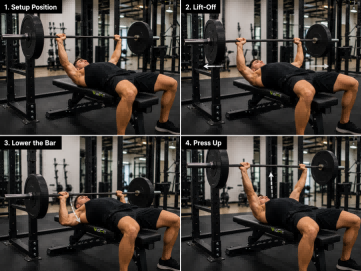
1. Set Up
Equipment: Use a sturdy flat bench and a barbell or dumbbells. Ensure the barbell rack is adjusted to a comfortable height for a safe lift-off.
Body Position: Lie flat on the bench with your eyes directly under the bar. Plant your feet firmly on the floor for stability and balance.
Grip: Hold the bar slightly wider than shoulder-width. Use a full grip, wrapping your thumbs around the bar for secure handling.
2. Prepare to Lift
Engage Your Back: Slightly arch your upper back and retract your shoulder blades to create a solid pressing platform.
Tighten Your Core: Brace your core to maintain full-body tension and control throughout the lift.
Lift-Off: Push the barbell up from the rack and position it directly above your chest with fully extended arms.
3. Lower the Bar
Controlled Descent: Slowly lower the bar to your mid-chest, maintaining a smooth and controlled motion.
Elbow Position: Keep elbows at roughly a 45-degree angle relative to your torso—avoid flaring them excessively.
Breathing: Inhale as you bring the bar down to maximize stability and oxygen flow.
4. Press the Bar Up
Explosive Press: Drive the bar upward using chest, shoulders, and triceps strength. Extend arms fully, but avoid hyperextending or locking the elbows.
Bar Path: Move the bar in a slight arc from the chest to directly above the shoulders.
Breathing: Exhale forcefully as you press the weight upward.
5. Repeat
Perform your desired number of repetitions, maintaining controlled and steady movements. Focus on consistent technique rather than lifting excessively heavy weights.
6. Re-Rack the Bar
Safe Placement: After completing your set, carefully guide the bar back to the rack.
Double-Check: Ensure the bar is securely positioned before releasing your grip to prevent accidents.
Bench Press Safety & Effectiveness Tips
- Warm Up Properly: Always prepare your muscles and joints with light sets or dynamic stretches before heavy lifts.
- Maintain Proper Form: Keep feet grounded, shoulder blades retracted, and control the bar through the full range of motion.
- Use Appropriate Weight: Choose a load that challenges you without sacrificing technique.
- Employ Safety Measures: Use a spotter or safety arms on a power rack for secure lifting.
- Focus on Controlled Repetitions: Avoid bouncing the bar and maintain steady, controlled movements for each rep.
Different Types of Bench Press Exercises
Shaking up your bench press routine can target specific muscles and maximize results. Here are the most effective variations:
1. Flat Barbell Bench Press
- Primary Muscles Worked: Chest (pectoralis major), triceps, front shoulders (anterior deltoids)
- Benefits: Builds overall chest mass and pressing strength
- Pro Tip: Lower the bar to mid-chest in a controlled path for full muscle engagement
2. Dumbbell Bench Press
- Primary Muscles Worked: Chest, triceps, stabilizers
- Benefits: Increases range of motion, balances strength, corrects muscle imbalances
- Pro Tip: Alternate between neutral and pronated grips to activate different muscles
3. Incline Bench Press
- Primary Muscles Worked: Upper chest, front shoulders
- Benefits: Develops upper chest for a fuller, well-rounded look
- Pro Tip: Keep incline between 30–45° to focus on chest, not shoulders
4. Decline Bench Press
- Primary Muscles Worked: Lower chest, triceps
- Benefits: Builds lower chest while reducing shoulder strain
- Pro Tip: Maintain tight core for proper alignment on the decline angle
5. Narrow-Grip Bench Press
- Primary Muscles Worked: Triceps, chest
- Benefits: Strengthens arms and lockout power
- Pro Tip: Keep elbows tucked to protect wrists and shoulders
6. Reverse-Grip Bench Press
- Primary Muscles Worked: Upper chest, triceps
- Benefits: Ideal for lifters with shoulder discomfort during traditional bench pressing
- Pro Tip: Use a spotter when lifting heavier weights
7. Spoto Press
- Primary Muscles Worked: Chest, triceps, stabilizers
- Benefits: Improves control and explosiveness off the chest
- Pro Tip: Pause the bar 1–2 inches above your chest for maximum tension
8. Dumbbell Fly to Press Combo
- Primary Muscles Worked: Chest, stabilizers
- Benefits: Stretches and strengthens the chest in one movement
- Pro Tip: Keep elbows slightly bent during flies to protect shoulders
Top Bench Press Mistakes and How to Avoid Them
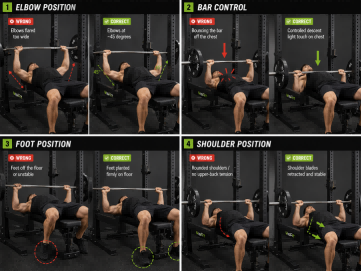
Even experienced lifters can make mistakes that limit results and increase the risk of injury. Avoid these common bench press errors to improve your performance and maximize muscle growth.
- Using Too Much Weight
Lifting more weight than you can control often leads to poor form and a higher risk of injury.
- Flaring Your Elbows
Allowing your elbows to flare too far out places unnecessary stress on the shoulder joints.
- Bouncing the Bar Off Your Chest
Using momentum instead of muscle control reduces effectiveness and can increase injury risk.
- Incomplete Range of Motion
Partial repetitions limit muscle activation and may slow strength development.
- Lifting Your Feet Off the Floor
Keeping your feet planted helps maintain stability, balance, and proper pressing power.
- Neglecting Proper Setup
Failing to retract your shoulder blades and brace your core can reduce strength and compromise form.
- Skipping Warm-Up Sets
A proper warm-up prepares your muscles and joints for heavier loads and helps prevent injuries.
Build the Ultimate Bench Press Setup with VIGFIT
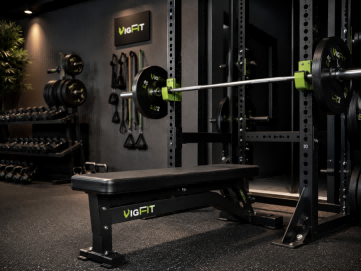
Whether you’re training at home or outfitting a commercial gym, VIGFIT offers high-quality weight benches, power racks, barbells, and strength equipment designed to help you train safely, build strength, and achieve better results.