
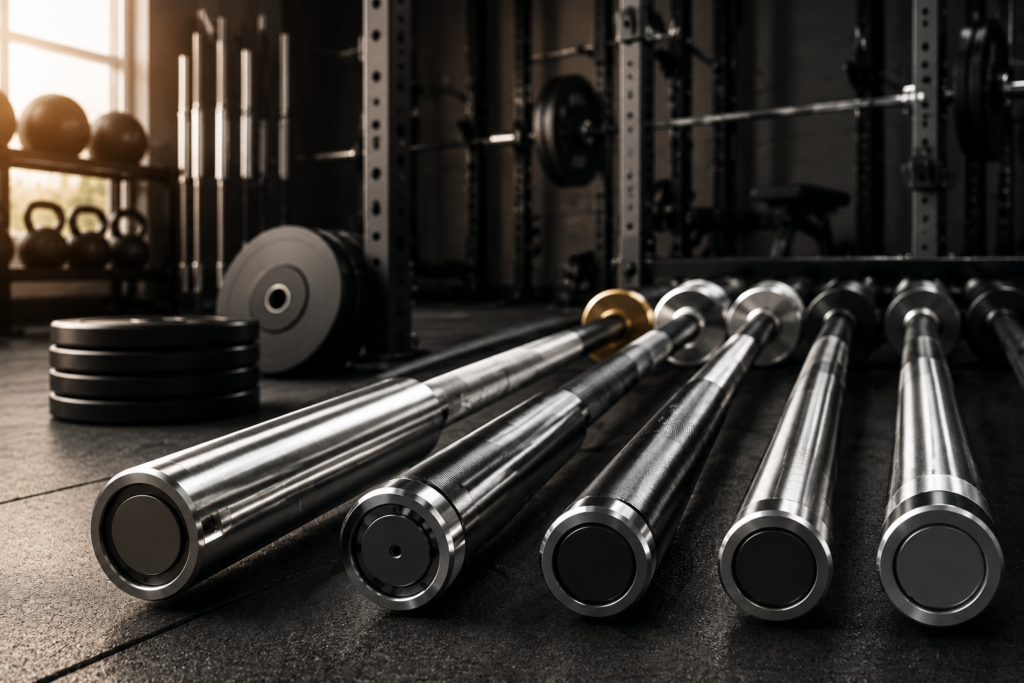
At first glance, most barbells look similar, but their performance and durability can vary greatly. Factors such as steel quality, tensile strength, whip, sleeve spin, knurling, and coating all affect training experience and long-term use. Whether for home gyms, commercial facilities, or fitness brands, choosing the right barbell is about more than price or specifications. In this guide, we’ll explain the key barbell types, important features, and common buying mistakes to help you choose the best barbell for your training needs and target users.
Are Barbells the Best Tool for Strength Training?
According to the American Council on Exercise (ACE), heavy resistance training is the most effective way to increase lean muscle and improve strength.Barbells are widely considered one of the most effective tools for strength training because they allow users to lift heavier weights and perform compound movements efficiently. Exercises such as squats, deadlifts, bench presses, overhead presses, and lunges engage multiple muscle groups at the same time, helping improve overall strength, muscle growth, balance, and athletic performance.
Compared with many other training tools, barbells also make progressive overload easier, allowing users to gradually increase weight as strength improves. This is one of the key reasons barbells are commonly used in powerlifting, Olympic lifting, CrossFit, commercial gyms, and home gym setups.
In our experience, barbells remain the preferred choice for serious strength training because they offer versatility, durability, and long-term training value for users at almost every fitness level.
Barbells vs. Dumbbells
Both barbells and dumbbells are highly effective for strength training, but they serve different purposes depending on workout style, training goals, and user preference.
Barbells are best known for heavy compound movements such as squats, deadlifts, bench presses, and Olympic lifts. Because both hands work together on a fixed bar, users can safely handle heavier loads, making barbells ideal for building overall strength, muscle mass, and athletic performance.
Dumbbells, however, provide greater freedom of movement and exercise variety. They are widely used for dumbbell exercises that target specific muscle groups, including dumbbell arm workouts, dumbbell leg exercises, shoulder dumbbell workouts, and back exercises with dumbbells. Many users also prefer dumbbell back exercises and arm workouts with dumbbells because they help improve muscle balance and coordination through unilateral training.
For home fitness users, adjustable dumbbells and adjustable dumbbell sets have become increasingly popular due to their space-saving design and versatility. A quality dumbbell set allows users to perform a wide range of workouts at home, from dumbbell for arms workout routines to full-body strength training. Combined with a dumbbell bench, users can expand their exercise options even further.
In commercial gyms and home gyms alike, barbells are often preferred for progressive overload and heavy lifting, while dumbbells offer more flexibility for functional training and isolation exercises. In reality, the most effective gym setup usually includes both barbells and adjustable dumbbells for home gym training, since each provides unique benefits for different workout needs.
Barbell Terms You Need to Know
Before choosing a barbell, it’s important to understand several key terms that directly affect performance, durability, and training experience. Whether you are purchasing barbells for a commercial gym, fitness brand, or home gym setup, these specifications can help you make a more informed decision.
Whip
“Whip” refers to how much a barbell bends or flexes during a lift. Olympic barbells typically have more whip to improve performance during dynamic lifts such as cleans and snatches, while power bars are designed with less whip for greater stability during squats, bench presses, and deadlifts.
Knurling
Knurling is the textured grip pattern on the bar shaft. More aggressive knurling provides a stronger grip, which is often preferred in powerlifting. However, overly sharp knurling may cause discomfort during high-volume training, especially in commercial gyms and CrossFit environments.
Tensile Strength
Knurling is the textured grip pattern on the bar shaft. More aggressive knurling provides a stronger grip, which is often preferred in powerlifting. However, overly sharp knurling may cause discomfort during high-volume training, especially in commercial gyms and CrossFit environments.
Tensile strength measures how much pressure a barbell can withstand before breaking. Higher tensile strength generally indicates better durability and long-term performance, especially for heavy strength training.
Yield Strength
Yield strength refers to the amount of stress a barbell can handle before permanently bending. This is one of the most important indicators of long-term structural stability.
Sleeve Spin
Sleeve spin describes how smoothly the sleeves rotate during lifting. Good sleeve spin helps reduce stress on the wrists and improves lifting efficiency during Olympic movements.
Bearings vs. Bushings
High-end Olympic barbells often use needle bearings for faster and smoother sleeve rotation, while bushings are more common in power bars and general-purpose barbells due to their durability and lower maintenance requirements.
Understanding these barbell terms can help buyers compare products more accurately and choose the right barbell for different training styles and gym environments.
What Separates a Great Barbell from an Average One?
A great barbell is not simply defined by price or advertised specifications. The best barbells combine durability, performance, comfort, and long-term reliability to match specific training styles and usage environments.
One of the most important factors is steel quality and tensile strength. High-quality barbells are designed to withstand heavy loads without bending or losing structural stability over time. Yield strength is equally important because it determines how well the bar resists permanent deformation after repeated use.
Whip and sleeve spin also play a major role in overall lifting performance. Olympic barbells typically require more whip and smoother sleeve rotation to improve movement efficiency during explosive lifts, while power bars are designed to feel stiffer and more stable for heavy squats, bench presses, and deadlifts.
Knurling is another key factor. A well-designed knurling pattern should provide secure grip without becoming overly aggressive or uncomfortable during high-volume training. This is especially important for commercial gyms facilities where bars are used by athletes with different experience levels.
Coating and finish quality directly affect long-term durability and appearance. Popular finishes such as , black zinc, hard chrome, and stainless steel all offer different levels of corrosion resistance, maintenance requirements, and grip feel.
Industry Insight: What Many Buyers Overlook
In our experience working with distributors, gym owners, and fitness brands, many buyers focus heavily on specifications and price while overlooking long-term performance. Some low-cost barbells advertise high tensile strength ratings but still develop permanent bending after months of heavy use. We have also seen barbells with smooth sleeve spin during initial testing begin to produce noise, resistance, or bearing failure over time.
Coating durability is another commonly overlooked issue. Poor-quality finishes may chip, fade, or rust after repeated use, negatively affecting both user experience and brand image. In addition, overly aggressive knurling may look more “professional,” but in commercial gyms it often leads to discomfort and member complaints.
What Materials Are Barbells Made From?
Barbells are manufactured using different types of steel, and the material quality plays a major role in durability, performance, and long-term stability. High-quality barbells are typically made from stainless steel or high-strength alloy steel, offering superior tensile strength and yield strength while maintaining straightness under repeated heavy lifting.
To improve corrosion resistance and appearance, barbells are commonly finished with protective coatings such as black oxide, black zinc, hard chrome, and Cerakote. Each coating offers different benefits in terms of grip feel, rust resistance, maintenance, and durability.
At VIGFIT, our barbells are available with premium zinc and Cerakote finishes to provide enhanced durability, long-lasting performance, and better protection against wear in both commercial gyms and home gym environments.
Types of Barbells
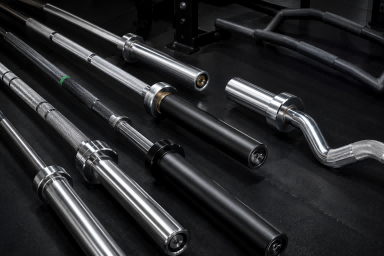
There are many different types of barbells available on the market, and each is designed for specific training styles, lifting techniques, and user needs. Understanding the differences between barbell types can help gym owners, distributors, and fitness users choose the right equipment for better performance and long-term durability.
Olympic Barbells
Olympic barbells are among the most versatile and widely used barbells in commercial gyms, CrossFit facilities, and home gyms. They are typically designed with moderate whip, smooth sleeve spin, and standardized dimensions for Olympic lifting movements such as cleans, snatches, and jerks.
Men’s Olympic barbells usually weigh 20kg (44–45lb) with a 28–28.5mm shaft diameter, while women’s Olympic barbells are generally lighter, shorter, and feature a smaller diameter for improved grip comfort.
Powerlifting Barbells
Power bars are specifically designed for heavy squats, bench presses, and deadlifts. Compared with Olympic barbells, they are stiffer, have less whip, and often feature more aggressive knurling for maximum grip during heavy lifts. Powerlifting barbells are ideal for strength-focused training environments.
CrossFit Barbells
CrossFit barbells are designed to balance durability, whip, and versatility for high-volume functional fitness training. These bars are commonly used for mixed workouts that combine Olympic lifting, powerlifting, and conditioning exercises.
Deadlift Bars
Deadlift bars are built with more whip and a slightly narrower shaft diameter to improve bar flex during heavy deadlifts. They also typically feature aggressive knurling for enhanced grip performance.
Trap Bars / Hex Bars
Trap bars, also called hex bars, are designed with a hexagonal frame that allows users to stand inside the bar during lifts. They are popular for deadlifts, shrugs, and beginner strength training because they help reduce stress on the lower back.
EZ Curl Bars
EZ curl bars feature a curved shaft design that reduces wrist strain during arm exercises with dumbbells and barbell curls. They are commonly used for bicep curls, tricep extensions, and upper-arm isolation training.
Safety Squat Bars
Safety squat bars are designed with padded shoulder supports and angled handles to improve comfort and stability during squat training. They are especially useful for beginners, rehabilitation training, and commercial gym environments.
Multi-Grip Bars
Multi-grip barbells provide several grip positions to reduce shoulder and wrist stress while allowing more exercise variation. These bars are often used for bench press variations and upper-body strength training.
Industry Insight: Choosing the Right Type Matters
In our experience, many buyers focus heavily on specifications while overlooking how the barbell will actually be used. Different training styles require very different bar characteristics. For example, Olympic lifting requires smooth sleeve spin and whip, while commercial gyms usually prioritize durability and lower maintenance. Choosing the right type of barbell for the target users and training environment can significantly improve user experience, equipment lifespan, and long-term value.
Key Factors to Consider When Buying a Barbell
Choosing the right barbell involves more than simply comparing price or weight capacity. Factors such as training style, steel quality, durability, whip, sleeve spin, and long-term maintenance all play an important role in overall performance and user experience.
Bar Diameter
Bar diameter directly affects grip comfort and lifting performance. Olympic barbells typically use a 28mm or 28.5mm shaft for better whip and control, while power bars are often slightly thicker for added stiffness and stability.
Tensile Strength & Yield Strength
Tensile strength measures how much stress a barbell can withstand before breaking, while yield strength indicates resistance to permanent bending. Higher-quality barbells usually feature stronger steel and better long-term structural stability, especially for heavy commercial use.
Whip & Sleeve Spin
Different training styles require different bar characteristics. Olympic lifting benefits from greater whip and smoother sleeve spin, while powerlifting bars are designed to feel stiffer with less rotation for maximum control during heavy lifts.
Knurling
Knurling affects grip and comfort. Aggressive knurling may provide stronger grip for heavy lifting, but it can also become uncomfortable during high-volume training or commercial gym use. Moderate knurling is often preferred for general fitness and multipurpose training.
Coating & Corrosion Resistance
Barbell coatings such as Cerakote, black zinc, hard chrome, and stainless steel all offer different levels of rust resistance, durability, and maintenance requirements. Choosing the right finish depends on gym environment, humidity, and usage frequency.
Bearings vs. Bushings
Needle bearings provide faster and smoother sleeve rotation, making them ideal for Olympic lifting. Bushings are generally more durable and lower maintenance, making them popular for powerlifting and commercial gyms.
Training Environment
The best barbell for a home gym may not be the best choice for a commercial facility. Home gym users often prioritize appearance, versatility, and value, while commercial gyms typically require higher durability and lower long-term maintenance costs.
Industry Insight: Don’t Focus Only on Specifications
In our experience, one of the biggest purchasing mistakes is focusing only on advertised specifications such as tensile strength or maximum load capacity. In real-world usage, factors like coating durability, sleeve construction, fatigue resistance, and long-term stability often matter much more. A barbell that performs well during initial testing may still develop bending, sleeve wobble, or maintenance issues after months of high-frequency training.
Ultimately, the best barbell is not necessarily the most expensive or the one with the highest specifications — it is the one that best matches the target users, training style, and long-term usage environment.
What Type of Barbell Should You Get?
The right barbell depends on your training style, gym environment, and long-term usage needs. Olympic barbells are ideal for dynamic lifts like cleans and snatches because they offer better whip and sleeve spin, while power bars are designed for heavy squats, bench presses, and deadlifts with greater stiffness and stability.
For home gyms, many users prefer barbells that balance performance, appearance, and value. Commercial gyms, however, usually prioritize durability, low maintenance, and consistent performance under high-frequency use.
Common Buyer Mistakes
In our experience, many buyers focus too much on specifications without considering actual training needs. For example, some home gym users buy stiff power bars for Olympic lifting, only to realize the lack of whip and spin affects training feel. We have also seen commercial gyms choose low-cost barbells to reduce upfront investment, but later face issues such as bar bending, sleeve wobble, and higher maintenance costs.If you have any more questions about barbells or home gym equipment, we’ll be happy to help. Be sure to visit VIGFIT to learn more about barbells, power racks, and everything you need to create an ideal workout space.