
Are you tired of replacing flimsy, wobbly fitness gear every single year? When it comes to building a home gym, the absolute biggest mistake fitness enthusiasts make is prioritizing the lowest price over structural biomechanics. According to research published by the National Strength and Conditioning Association (NSCA) , inferior equipment not only limits your progressive overload but actively increases joint injury risks.
In this guide, we will reveal how to design a professional-grade training space, maximize your square footage, and invest in heavy-duty gear that outlasts you. Let’s stop wasting money and start building real strength.
Why “Buy Once, Cry Once” is the Ultimate Home Gym Strategy
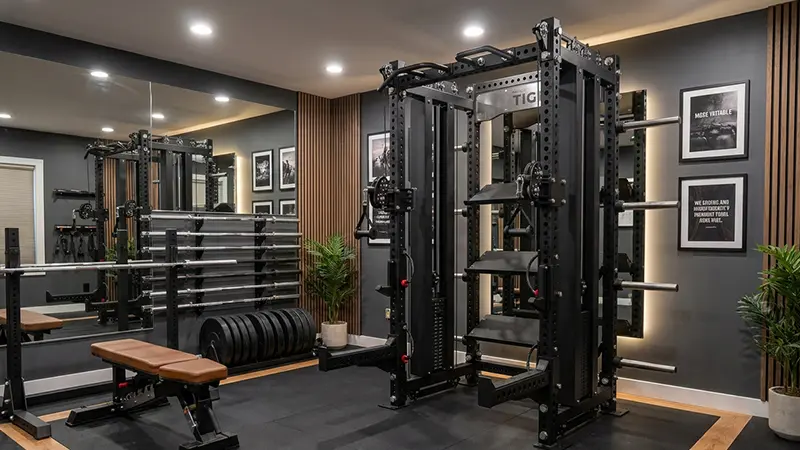
The internet is flooded with budget DIY setups, but residential-grade tubular steel will eventually bend under serious weight. Adopting the “buy once, cry once” mentality is crucial for your safety and long-term ROI. A premium power rack built from 11-gauge steel guarantees absolute stability, allowing you to dump a heavy squat safely without a spotter. You are not just buying metal; you are buying peace of mind.
To clearly understand the difference in your investment, review this quick breakdown of equipment grades before making a purchase:
Feature Cheap Residential Grade Professional Commercial Grade Impact on Your Workout Steel Thickness 14-gauge or thinner 11-gauge (3mm) heavy-duty Ensures zero wobble during heavy pull-ups or racking. Pulleys & Cables Plastic pulleys, nylon cords Aluminum pulleys, aircraft cables Delivers constant tension and buttery smooth motion. Weight Capacity Max 300 lbs 1000+ lbs true rating Allows for lifetime progressive overload safely.
The Real Cost Analysis: Cheap vs. Pro-Grade
Let’s break down the financial reality of building a home gym. A budget residential power rack might cost $300 upfront. However, factoring in the bent safety pins, frayed nylon cables, and inevitable replacement within two years, your actual cost skyrockets. Conversely, a $1,200 commercial-grade rack built with 3mm thick, 11-gauge tubular steel will comfortably outlast your lifting career. When you divide the cost by a decade of daily use, the premium option is mathematically the cheapest gear you can buy.
Maximize Space with High-Yield Free Weights
Space is undoubtedly your most valuable asset. Instead of cluttering your garage with single-use isolation machines, you must invest in highly versatile equipment like a robust functional trainer and a set of premium adjustable dumbbells. A heavy-duty cable crossover system can effectively replace up to 15 different machines, optimizing your floor plan perfectly.
Once you have your premium dumbbells ready, the real work begins. You can immediately apply the scientifically-backed routines found in our comprehensive The Ultimate Guide to the Best Tricep Dumbbell Workouts for Arm Growth to force massive upper body hypertrophy without ever leaving your house.
Footprint Efficiency and Factory-Grade Specs
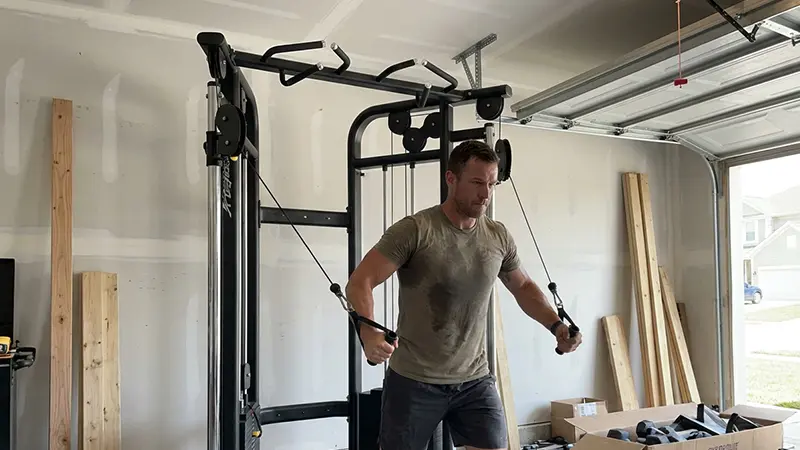
Space anxiety is the number one hurdle when building a home gym. You do not need a 1000 sq. ft. warehouse. A strategically designed dual-stack functional trainer only requires about a 2m x 2m (approx. 43 sq. ft.) footprint. As a direct manufacturer, we engineer our cable systems with a 1:2 resistance ratio and aircraft-grade steel cables rated for a 2,000lb tensile strength. This ensures butter-smooth biomechanics whether you are performing a 10lb lateral raise or a 200lb tricep pushdown.
The Missing Link: Bulletproofing Your Posterior Chain
Most home fitness setups heavily favor pushing movements (like bench presses), which inevitably leads to rounded shoulders and severe posture issues over time. Building a robust posterior chain is absolutely mandatory for spinal health and total-body pulling power. To combat muscle imbalances, you need a dedicated, heavy-duty pulling station in your sanctuary.
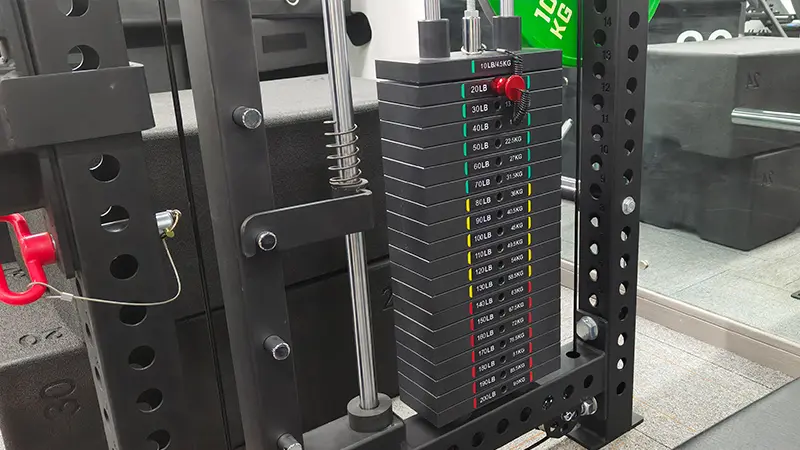
Whether it is a commercial-grade lat pulldown attachment for your rack or a standalone seated row machine, ensure the weight stack can handle your progression. For a deep, technical dive into selecting the exact right pulling gear for your specific space, review our expert equipment breakdown in The Ultimate Guide to the Best Back Exercise Machine Gym for Growth .
Conclusion
Ultimately, successfully building a home gym requires treating your personal space with the exact same respect as a high-end commercial facility. By ruthlessly avoiding cheap, unstable racks and investing strategically in high-yield, durable equipment, you guarantee a significantly higher return on your fitness journey. Stop compromising on your joint safety and biomechanics, and start building a sanctuary that truly motivates you to lift heavier and safer every single day.
Upgrade to Commercial Quality Today
As a trusted global manufacturer of commercial-grade fitness equipment, we bridge the massive gap between premium gym quality and home affordability. Ready to upgrade your garage with serious equipment engineered to last a lifetime? Browse our exclusive Commercial Strength Equipment Catalog today, or contact our layout engineering team directly for a completely free 3D spatial design consultation!
🎁 Download our Free 3D Home Gym Layout Guide (PDF)
[Insert your email form/button here] We respect your privacy. No spam, ever.