
Struggling to see changes in the mirror despite working out every day? Mastering progressive overload training is the ultimate key to breaking through any fitness plateau. Sports science data indicates that continually challenging your musculoskeletal system is the primary driver for long-term muscle hypertrophy and strength gains.
In this comprehensive guide, we will explain what is progressive overload, reveal its core scientific principles, and provide a practical workout plan. Let’s unlock your true potential.

Progressive Overload Definition: The Science of Growth
To understand how to build a stronger physique, we must first clarify the progressive overload definition. In simple terms, it means gradually increasing the stress placed upon your body during exercise over time. If you lift the same weights for the exact same reps forever, your muscles have no physiological reason to adapt or grow larger.
By consistently demanding more from your body, you force your muscle fibers to rebuild thicker and denser. According to the National Academy of Sports Medicine (NASM) , implementing a structured progressive overload workout is mandatory for preventing muscular stagnation and improving bone density.
How to Progressive Overload: 3 Proven Strategies
Many beginners mistakenly believe that adding more weight to the barbell is the only way to progress. In reality, knowing how to progressive overload involves manipulating multiple training variables to stimulate continuous adaptation safely and effectively.
1、Increase the Resistance (Weight)
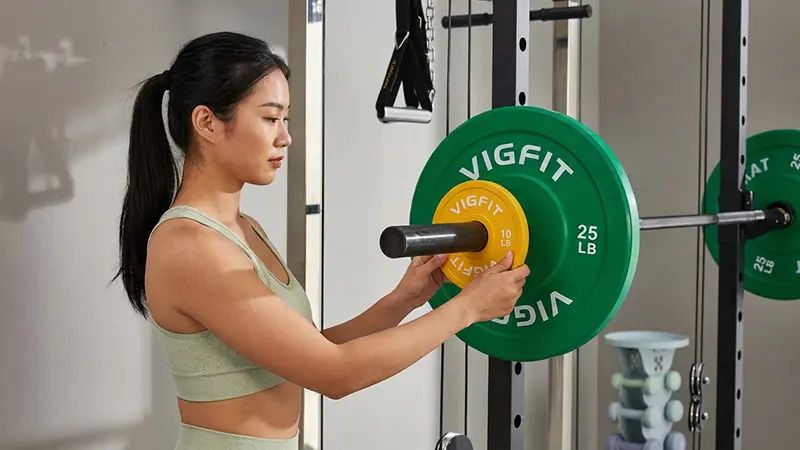
The most straightforward method for progressive overload is increasing the load. Once you can comfortably perform your target reps (e.g., 3 sets of 10) with perfect form, try adding 2.5 to 5 pounds to the bar. Always prioritize perfect technique over lifting heavier weights to protect your joints from unnecessary injuries.
2、Increase the Volume (Reps and Sets)
If adding weight feels too heavy or compromises your form, try increasing your training volume instead. Adding one or two extra reps to your working sets is a highly effective way to execute a progressive overload workout. Once you hit the upper limit of your specific rep range, you can then safely increase the weight and drop the reps back down.
3、Optimize Tension (Tempo and Rest)
Slowing down the eccentric (lowering) phase of your lift drastically increases the time your muscles spend under tension. Additionally, decreasing your rest periods between sets forces your muscles to perform the exact same amount of work in less time. This metabolic stress is a massive catalyst for muscle endurance and serious hypertrophy.gage the latissimus dorsi.
Structuring Your Progressive Overload Workout Plan
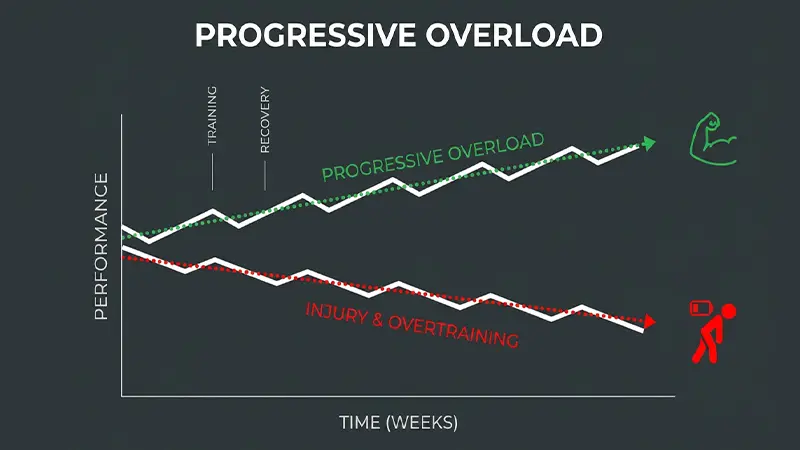
To apply these scientific principles, you need a meticulously structured progressive overload workout plan. An advanced tip that most beginners miss is the implementation of a “Deload Week.” Your central nervous system (CNS) requires adequate recovery to prevent overtraining.
We highly recommend a programming cycle of 3 weeks of progressive intensity followed by 1 week of reduced volume (lifting at 60% of your normal weight). This strategic recovery allows your muscles to heal fully, ensuring you come back stronger for the next training block.
Conclusion
Achieving your dream physique is not about random guessing; it is about strategic, measured, and consistent progression. By truly understanding the progressive overload definition and meticulously applying these variables to your routine, you guarantee long-term strength gains. Remember to track your workouts diligently in a logbook, as you cannot progressively overload what you do not measure. Stay patient, trust the science, and watch your strength skyrocket!
Accelerate Your Progress Today
As a premium fitness equipment manufacturer, we provide the precision tools necessary to execute your training safely and effectively. Ready to take your progressive overload training to the next level? Click here to browse our highly accurate [Micro-Fractional Weight Plates] designed for perfect progression, or contact our expert coaching team for a free personalized equipment consultation today!