
For fitness brands, importers and equipment distributors, choosing between a functional trainer and a cable crossover is not simply a training preference. It is a product-positioning decision that affects your target customer, selling price, warehouse space, shipping cost, installation support and after-sales workload.
The short answer is that a functional trainer usually suits a broader customer base because it offers multiple pulley positions and exercise options within a relatively compact footprint. A traditional cable crossover is generally better suited to commercial gyms with sufficient space and customers who value a wide cable span for flyes and crossover movements.
However, product names are not standardized across every supplier. Some manufacturers use “functional trainer,” “cable crossover” and “dual adjustable pulley” for very similar machines. Professional buyers should therefore compare drawings, pulley systems, usable resistance and packing data instead of making a decision based on the product name alone.
What Is the Commercial Difference?
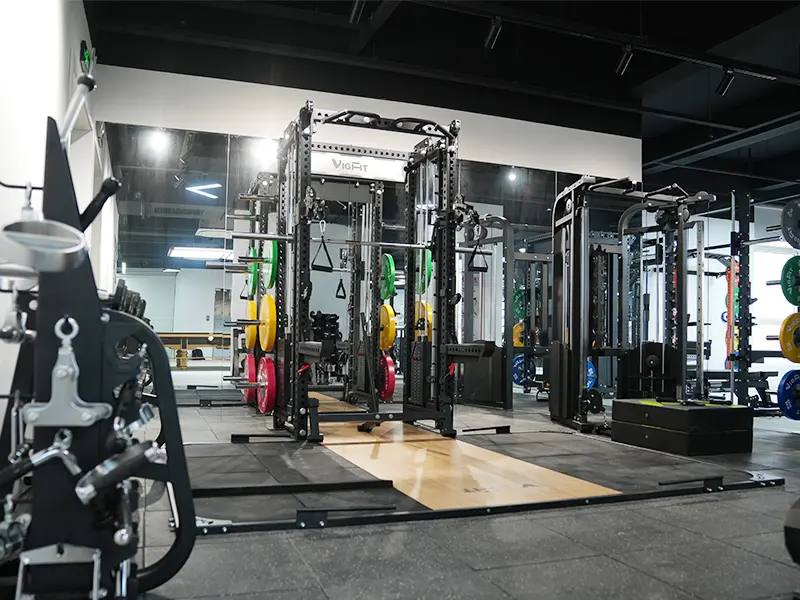
A functional trainer normally uses one or two adjustable pulley trolleys. The pulley height can be changed to support pressing, pulling, rotational and lower-body exercises. Commercial configurations may be standalone, wall-mounted or integrated with a power rack or Smith machine.
A cable crossover traditionally uses two towers positioned farther apart. This wider working area is attractive to commercial gyms and bodybuilding-focused facilities because it provides more room for cable flyes and movements requiring a broad pulling angle.
Modern products increasingly combine these two formats. A wide crossover may use fully adjustable pulleys, while a compact functional trainer may still perform crossover movements. This means the purchasing question is not only “Which type should I buy?” but also “Which configuration is suitable for my sales channel?”
Buyers who are still deciding how cable equipment fits into a complete strength range can review VIGFIT’s strength training equipment categories before creating a final SKU list.
Functional Trainer vs Cable Crossover: B2B Comparison
| Purchasing factor | Functional trainer | Cable crossover |
| Typical market position | Versatile cable station for mixed users | Wide commercial cable station |
| Target customers | PT studios, hotels, home fitness brands and compact gyms | Commercial clubs, bodybuilding gyms and institutional projects |
| Product footprint | Usually more compact, depending on model | Usually requires more horizontal space |
| Pulley configuration | Commonly uses adjustable pulley trolleys | May use fixed or adjustable pulleys |
| Resistance options | Selectorized, plate-loaded or hybrid | Commonly selectorized, but configurations vary |
| Packaging | Compact models may be easier to consolidate | Long crossbeams and wide frames may increase packing volume |
| Sales advantage | Broad application and high exercise variety | Strong commercial appearance and spacious cable movement |
| Main sourcing risk | Complex configuration and attachment compatibility | Higher freight, installation and floor-space requirements |
These are typical differences, not universal specifications. Request model-specific drawings and quotations before comparing suppliers.
1. Select the Product According to Your Sales Channel
The right product depends first on who will buy it from you. A single configuration rarely performs equally well across home fitness, e-commerce, boutique studios and full commercial gym projects.
For Fitness Brands and E-Commerce Sellers
A compact functional trainer may be easier to position for premium home gyms, garage gyms and smaller studios. Buyers in these segments often value multifunctionality, compact dimensions and integration with a rack or Smith machine.
Before selecting a model, consider carton size, total shipping weight, assembly difficulty and the likelihood of missing-part complaints. A product that looks attractive in a catalog may create avoidable returns if it is difficult for the end customer to assemble.
For Distributors and Commercial Gym Suppliers
Project buyers should start with member demand and available floor space. VIGFIT’s guide on how to choose commercial gym equipment explains the broader facility-planning process, so this article focuses specifically on cable-machine procurement.
Instead of adding several visually similar products, build a clear good-better-best structure. Separate the models by pulley configuration, usable resistance, frame format, target application and included attachments.
2. Compare the Specifications That Affect Resale and Use
Wholesale buyers should not compare cable machines by appearance and stack weight alone. The following specifications determine whether the machine matches the advertised application.
Pulley Ratio and Usable Resistance
On a nominal 1:1 system, the resistance at the handle is approximately equal to the selected stack weight, subject to the actual cable path and mechanical losses. On a 2:1 system, the felt resistance is approximately half the selected stack weight, while the cable generally travels farther.
Therefore, a heavier-looking stack does not necessarily provide more usable resistance. Every quotation should state the weight per stack, pulley ratio and approximate resistance available at each handle.
Cable Travel and Adjustment Range
Cable travel affects exercises such as walking lunges, rotational movements and bilateral flyes. The specification sheet should state the cable travel and show the highest and lowest usable pulley positions.
For adjustable trolleys, compare the number of positions, spacing between positions and locking method. These details influence how easily different users can set up the machine.
Independent or Shared Weight Stacks
Independent stacks allow each side to use a different resistance and may support two users more effectively. Shared-stack designs can simplify the structure but may limit simultaneous use.
The quotation and product page should state this clearly. Ambiguous descriptions can cause incorrect listings and customer complaints after delivery.
3. Check Safety and Quality-Control Requirements Before Ordering
Cable machines combine frames, weight stacks, moving pulleys, cables and adjustable locking parts. This creates more inspection points than a simple rack or bench.
For applicable stationary strength equipment, buyers can review the scope of ISO 20957-1:2024, covering general safety requirements for stationary training equipment, and ISO 20957-2:2024, covering additional requirements for stationary strength training equipment.
These references do not mean that every model is automatically certified or compliant. Test reports and certificates should always be verified by exact model, version, intended market and document scope.
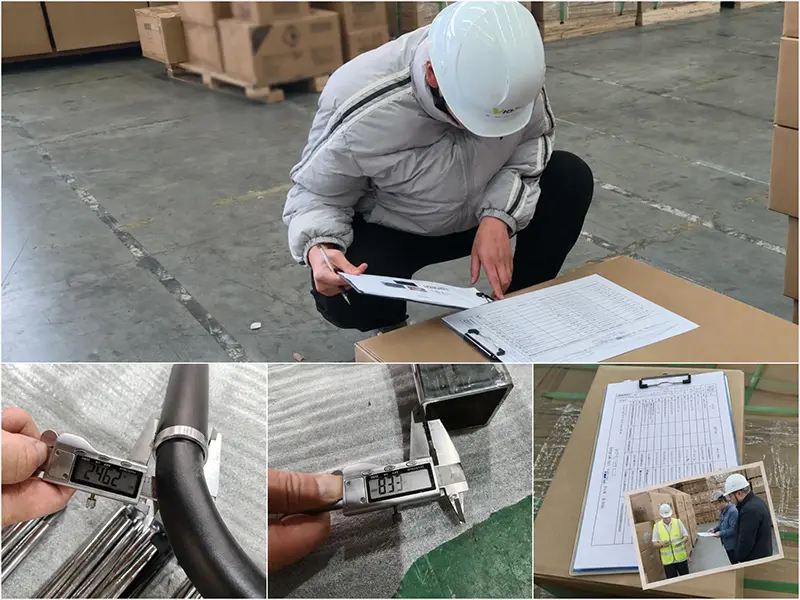
A practical pre-shipment inspection should cover at least:
- Frame dimensions and assembly alignment
- Weld appearance and surface finish
- Pulley rotation and cable tracking
- Cable termination and protective covering
- Weight-stack movement and guide-rod alignment
- Trolley adjustment and locking engagement
- Fasteners, guards and warning labels
- Included attachments and spare parts
- Carton contents, packaging protection and markings
Adjustment locks deserve particular attention. A 2024 U.S. Consumer Product Safety Commission recall involved an adjustable pulley carriage whose pop-pin could fail to engage fully. This does not indicate that all cable machines share the same problem, but it demonstrates why locking engagement should be checked and documented.
4. Plan OEM Options Without Creating Unnecessary SKUs
For most private-label buyers, the safest first step is to customize visible brand elements before changing the main structure. Common options may include frame color, logo position, product labels, instruction manuals, cartons and included attachments, subject to the selected model.
Structural changes, custom pulley arrangements and new attachment interfaces require more engineering confirmation. They may affect samples, packaging, assembly instructions, tooling, testing and minimum order quantity.
Brands building a complete cable range should also review compatible gym attachments and accessories. Handles, ropes, bars and storage should be confirmed as standard or optional items instead of being assumed from product photos.
5. Compare Packaging, Installation and After-Sales Risk
Large fitness equipment is often quoted by unit price, but its real landed cost also depends on packing volume, gross weight, container utilization and local delivery requirements.
Wide cable crossovers may require long crossbeams and larger packages. Integrated functional trainers may include more parts and a more complicated assembly sequence. Neither format is automatically cheaper to deliver.
Before confirming an order, request:
- Packing dimensions and gross weight by carton
- The number of cartons or crates per unit
- Loading quantity estimates
- Assembly manual or installation video
- A complete hardware and attachment list
- Recommended spare cables, pulleys and pins
- The warranty scope for the selected model
- The procedure for reporting missing or damaged parts
For facility projects, equipment spacing and securing should follow the manufacturer’s recommendations and applicable local requirements. The Health & Fitness Association’s facility layout guidance also recommends proper equipment spacing and securing equipment appropriately.
Which Product Should You Add to Your Range?
Choose a functional trainer when your target customers value compact dimensions, full-body exercise variety and flexible installation. It is often easier to position across home fitness brands, personal training studios, hotels and smaller commercial facilities.
Choose a cable crossover when your target market includes large commercial gyms, bodybuilding facilities and buyers who prefer a wider working area. Confirm that your logistics and installation support can handle the larger structure.
Offer both only when they have clearly different specifications and customer positions. Adding two similar-looking machines without a clear SKU strategy can increase inventory complexity without expanding the real customer base.
Functional Trainer and Cable Crossover RFQ Checklist
Include the following information when sending an inquiry:
- Target country and sales channel
- Intended use: home, light commercial or full commercial
- Preferred machine structure and reference images
- Selectorized or plate-loaded resistance
- Required weight stack and pulley ratio
- Overall dimension and cable-travel requirements
- Standard and optional attachments
- Frame color, logo and packaging requirements
- Order quantity and trial-order expectations
- Destination port and required delivery date
Source Functional Trainers and Cable Crossovers from China
VIGFIT is a China-based fitness equipment manufacturer and exporter serving fitness brands, importers, distributors, online sellers and gym projects. Our in-house production focuses on tubular strength equipment. Where a project requires complementary equipment, selected products can be coordinated through our supply network rather than automatically presented as in-house manufactured.
Review VIGFIT’s functional and conditioning equipment range, or contact VIGFIT with your target market, reference model, expected quantity, branding requirements and destination.
We can help clarify model-specific configurations, OEM feasibility, standard and optional accessories, packaging information, inspection requirements and estimated lead time before you place a bulk order.
Frequently Asked Questions
Is a functional trainer the same as a cable crossover?
Not always. The names sometimes overlap, but a functional trainer usually emphasizes adjustable pulley positions and compact exercise variety, while a traditional cable crossover emphasizes a wider cable span. Compare actual specifications rather than relying on the name.
Should a distributor stock both products?
Only when the two models serve different customer groups or price positions. A compact functional trainer and a full-width commercial cable crossover can form a logical two-SKU range, while two very similar models may create unnecessary inventory.
What should be inspected before shipment?
Inspect frame alignment, welding and finish, pulleys, cables, guide rods, weight-stack movement, trolley locking, guards, labels, accessories, hardware and packaging. The checklist should be adjusted to the exact model and destination-market requirements.