
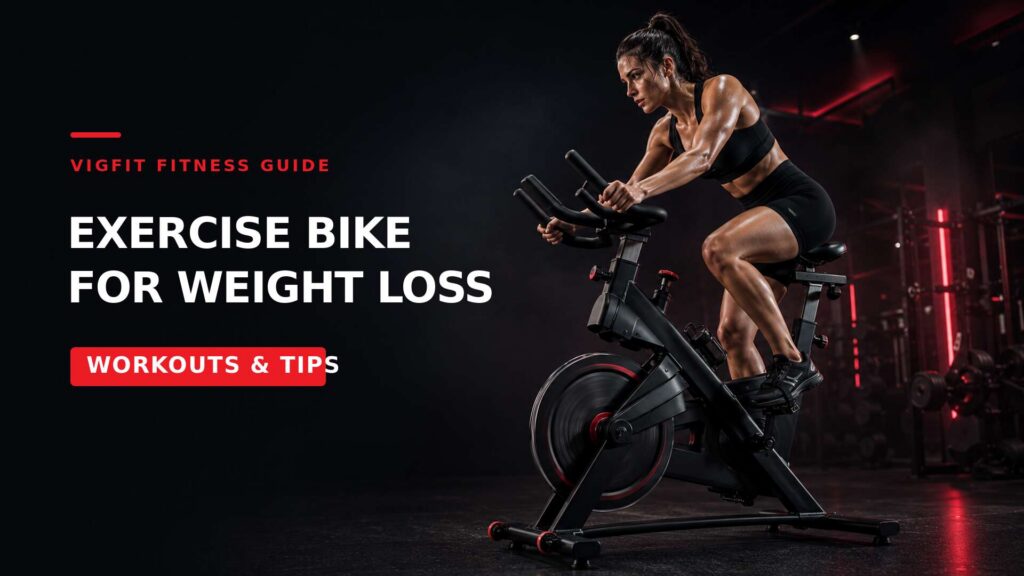
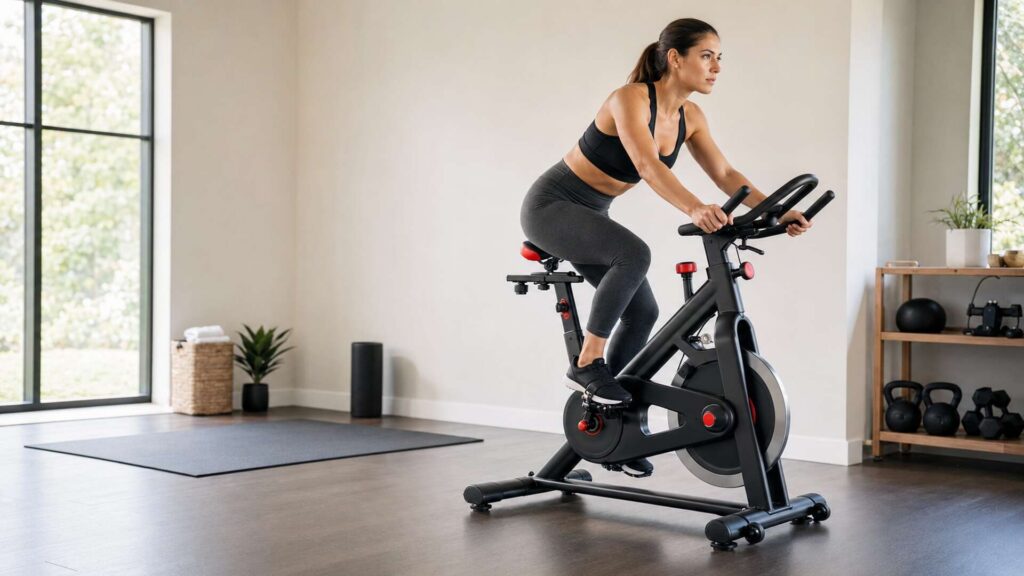
Sustainable weight loss depends on maintaining a calorie deficit—using more energy than you consume over time. Nutrition plays the leading role, while regular exercise increases daily calorie expenditure, improves cardiovascular fitness and supports a more consistent weight-loss routine.
An exercise bike provides a convenient, low-impact way to stay active at home or in the gym. In this VIGFIT guide, we explain why cycling can support weight loss and share practical exercise bike workouts for different fitness levels.
How Exercise Affects Your Daily Calorie Burn
Total daily energy expenditure (TDEE) is the total number of calories your body uses each day. It generally includes:
- Basal metabolic rate: Energy used to support essential functions such as breathing and circulation.
- Thermic effect of food: Energy required to digest and process food.
- Exercise activity: Calories used during planned workouts such as indoor cycling.
- Non-exercise activity: Energy used through walking, housework, standing and other daily movement.
- For a more personalized estimate, the NIDDK Body Weight Planner can help adults create a calorie and physical activity plan based on their individual goals.
Increasing your daily movement and adding regular exercise bike workouts can raise energy expenditure and help create the calorie deficit needed for weight loss. However, calorie calculators and exercise displays only provide estimates. If your TDEE calculation already includes your activity level, avoid automatically adding all displayed workout calories back into your daily intake.
Why Exercise Bikes Can Support Weight Loss
Exercise bikes can support weight loss by making regular cardio training accessible, adjustable and easier to maintain.
Increase Daily Calorie Expenditure
Cycling raises your daily energy expenditure, helping support a calorie deficit when combined with appropriate nutrition. Actual calorie burn varies with body weight, workout duration, resistance and intensity.
Provide Low-Impact Cardio
Unlike running or jumping, stationary cycling does not involve repeated impact with the ground, making it a more comfortable cardio option for many users.
Offer Adjustable Intensity
Users can change cadence, resistance and workout duration to match their fitness level. Intervals can also be added as endurance improves.
Make Consistent Training Easier
Exercise bikes are suitable for indoor workouts regardless of traffic or weather. Their adjustable intensity makes them approachable for beginners while still challenging experienced riders.
Additional Benefits of Stationary Cycling
A Controlled Indoor Training Environment
Stationary bikes allow users to exercise without traffic, uneven roads or poor weather, creating a more predictable and accessible cycling experience.
Improved Cardiovascular Fitness
Regular cycling challenges the heart and lungs, helping improve aerobic endurance and overall cardiovascular fitness.
Greater Lower-Body Endurance
Pedaling engages the quadriceps, hamstrings, glutes and calves. Increasing resistance can place more demand on these muscles and support lower-body muscular endurance.
4 Exercise Bike Workouts That Can Support Weight Loss
Different cycling formats can increase weekly activity and make a weight-loss routine easier to maintain. Choose the approach that matches your fitness level, available time and recovery needs.
1. Steady-State Cycling
Ride at a comfortable but purposeful pace for 30–60 minutes, maintaining an effort of around 4–6 out of 10. Beginners can start with shorter sessions and gradually increase the duration.
2. Interval Cycling
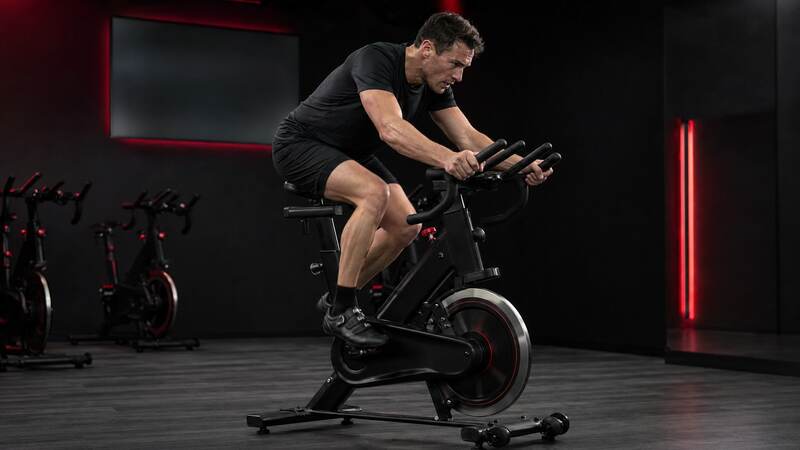
Alternate short periods of challenging effort with longer recovery periods. For example, after warming up, complete eight rounds of 30 seconds hard cycling followed by 90 seconds at an easy pace.
Limit demanding interval sessions to one or two times per week at first, allowing enough time for recovery.
3. Instructor-Led Cycling Classes
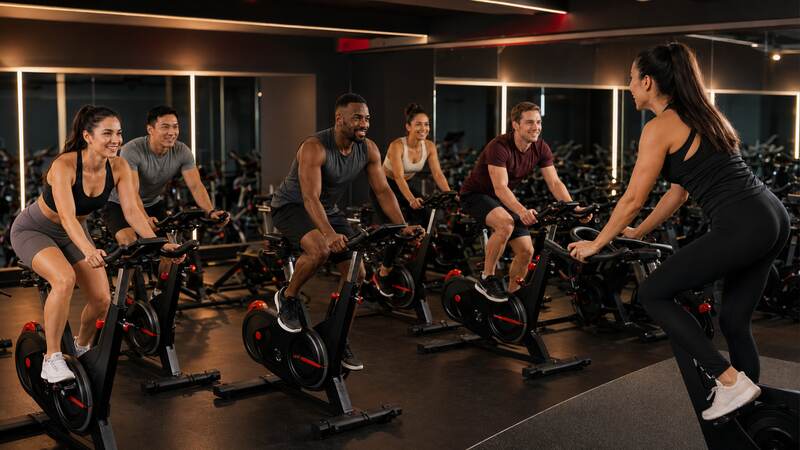
Spin classes provide structured changes in cadence and resistance without requiring you to design the workout yourself. The group environment can also help improve motivation and consistency.
4. Short Rides Before or After Other Workouts
An easy 5–10-minute ride can prepare your body for strength training. A short moderate ride after training can add extra activity, provided it does not interfere with recovery.
Rather than treating every workout as an exact calorie exchange, focus on consistent weekly cycling, suitable nutrition and gradual progress. Actual weight change varies between individuals and does not always follow a fixed calories-per-pound formula.
Find an Activity You Can Maintain
If cycling is not the right fit for you, activities such as walking, running, rowing and strength training can also help increase daily movement. The best approach is one that matches your fitness level, goals and lifestyle—and that you can follow consistently.
Looking for reliable exercise bikes for your gym, studio or fitness brand? Explore VIGFIT spin bikes, air bikes, upright bikes and recumbent bikes, with flexible configurations and OEM/ODM support for global B2B buyers.