
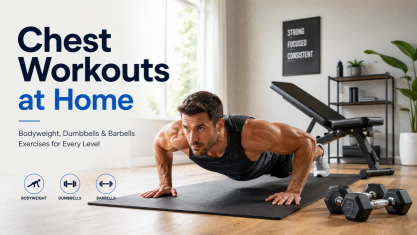
Building a stronger, more developed chest does not require a commercial gym or a room full of expensive equipment. With the right exercise selection, consistent training, and proper form, you can effectively train your chest at home using bodyweight movements, dumbbells, a workout bench, or a simple home gym setup.
In this guide, we cover the best chest workouts at home for beginners, intermediate exercisers, and experienced lifters. You will learn how to perform effective no-equipment chest exercises, build a dumbbell chest workout, target the chest from different pressing angles, and gradually increase the difficulty of your training.
Whether you are starting with basic push-ups or building a complete home gym with strength equipment, these exercises will help you improve upper-body strength, muscular control, and chest development safely and effectively
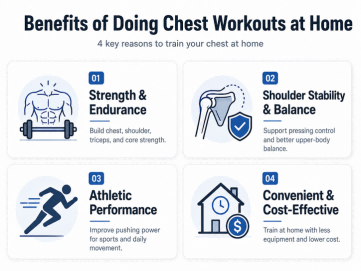
Benefits of Doing Chest Workouts at Home
Training your chest at home is a practical way to build upper-body strength, improve muscular endurance, and maintain a consistent fitness routine. With the right exercises and proper technique, you can effectively train your chest, shoulders, triceps, and core without needing a commercial gym.
Build Upper-Body Strength and Endurance
Most chest exercises are compound movements that involve several muscle groups at the same time. Push-ups, dumbbell presses, and bench presses primarily target the chest while also strengthening the shoulders, triceps, and core. These muscles support everyday actions such as pushing, lifting, and stabilizing the upper body.
Support Shoulder Stability and Muscular Balance
A strong chest contributes to controlled pressing movements and upper-body stability. However, chest training should be combined with back and rear-shoulder exercises to maintain muscular balance and support healthy posture.
Improve Athletic Performance
Chest strength plays an important role in many sports and physical activities. Strong pressing muscles can help improve performance in movements involving pushing, throwing, contact, and upper-body power.
Train Conveniently and Cost-Effectively
One of the biggest advantages of a chest workout at home is convenience. Many effective exercises require little or no equipment, making home training suitable for busy schedules, limited spaces, and smaller budgets.
You can begin with bodyweight exercises such as push-ups and gradually increase the difficulty as your strength improves. Adding dumbbells, resistance bands, or an adjustable workout bench gives you more exercise options and makes it easier to apply progressive overload over time.
Warm-Up Before Your At-Home Chest Workout
A proper warm-up prepares your chest, shoulders, elbows, and core for pressing movements. It can help improve movement quality, increase joint mobility, and reduce the risk of discomfort when performing push-ups, dumbbell presses, or bench exercises.
Try this simple 4–5 minute warm-up before starting your chest workout:
- Arm Circles: 10 forward and 10 backward
- Shoulder Blade Push-Ups: 10 controlled reps
- High Plank Hold: 20–30 seconds
- Incline or Knee Push-Ups: 8–10 easy reps
- Dynamic Chest Opener Pulses: 15–20 reps
Move slowly and keep the intensity low. The goal is to activate the muscles and prepare the joints, not to create fatigue before the main workout.
Take a few controlled breaths between exercises. Once your shoulders feel mobile, your chest feels activated, and your pressing movement feels smooth, you are ready to begin training.
No-Equipment Chest Exercise #1: Standard Push-Ups
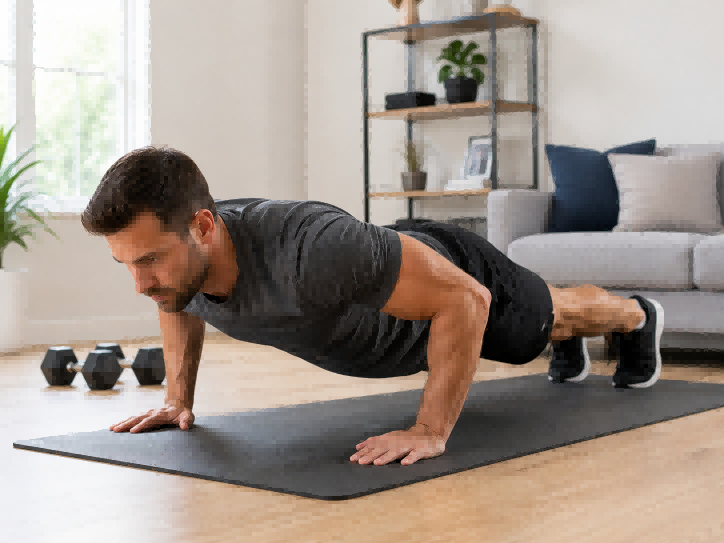
Best for: Overall chest strength and upper-body development
Sets: 3–4
Reps: 8–15
How to Do a Standard Push-Up
- Place your hands slightly wider than shoulder-width apart, with your fingers pointing forward.
- Extend your legs behind you and keep your body in a straight line from your head to your heels.
- Brace your core and squeeze your glutes to prevent your hips from dropping or lifting.
- Bend your elbows and lower your chest toward the floor under control. Keep your elbows angled slightly away from your body rather than flaring them fully outward.
- Press through your palms until your arms are extended, while maintaining a stable body position.
Why This Exercise Works
Standard push-ups are one of the most effective bodyweight chest exercises because they train the pectoral muscles while also engaging the triceps, front shoulders, and core. They require no equipment and can be adapted to suit nearly any fitness level.
Beginners can perform push-ups with their hands elevated on a stable bench or platform, or use a knee-supported variation. More advanced trainees can increase the difficulty by slowing the lowering phase, pausing near the bottom, elevating their feet, or adding controlled external resistance.
Focus on completing each repetition with proper alignment and a full, comfortable range of motion rather than rushing through the set.
No-Equipment Chest Exercise #2: Incline Push-Ups
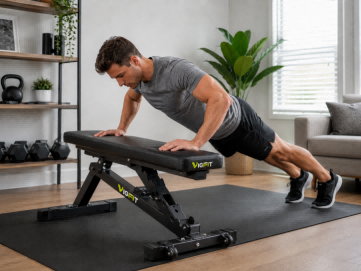
Best for: Beginners, building push-up strength, and controlled chest training
Sets: 3
Reps: 10–15
How to Do an Incline Push-Up
- Place your hands slightly wider than shoulder-width apart on a stable bench, countertop, box, or other elevated surface.
- Step your feet back until your body forms a straight line from your head to your heels.
- Brace your core and keep your hips level throughout the movement.
- Bend your elbows and slowly lower your chest toward the elevated surface.
- Keep your elbows slightly tucked rather than allowing them to flare directly outward.
- Press through your palms to return to the starting position while maintaining full-body control.
Why This Exercise Works
Incline push-ups reduce the amount of bodyweight you need to lift, making them easier than standard floor push-ups. They still train the chest, triceps, front shoulders, and core, while allowing beginners to practice proper pressing mechanics with greater control.
Because your hands are elevated, this variation generally places less stress on the wrists, shoulders, and upper body. It is also useful for building the strength needed to progress toward standard push-ups.
As your strength improves, gradually lower the height of the support surface until you can perform controlled push-ups from the floor.
No-Equipment Chest Exercise #3: Decline Push-Ups
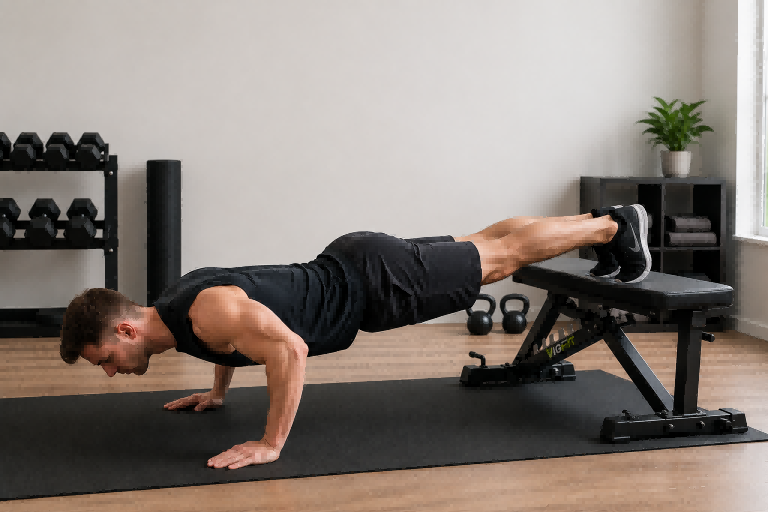
Best for: Advanced push-up training, upper-chest emphasis, and increased upper-body strength
Sets: 3
Reps: 8–12
How to Do a Decline Push-Up
- Place your feet on a stable step, bench, couch, or low platform.
- Position your hands slightly wider than shoulder-width apart on the floor.
- Keep your body in a straight line from your head to your heels, and brace your core to prevent your hips from dropping.
- Bend your elbows and lower your chest toward the floor in a slow, controlled motion.
- Keep your head neutral and your elbows angled slightly away from your body.
- Press firmly through your palms to return to the starting position without losing body alignment.
Why This Exercise Works
Elevating your feet shifts more of your bodyweight toward your hands, making decline push-ups more demanding than standard push-ups. The increased shoulder angle generally places greater emphasis on the upper portion of the chest and the front shoulders while continuing to train the triceps and core.
The higher your feet are elevated, the more challenging the exercise becomes. Begin with a low platform and increase the height gradually as your strength and control improve.
Avoid raising your feet too high if it causes your hips to sag, your elbows to flare excessively, or your shoulders to feel uncomfortable. Proper alignment and controlled repetitions are more important than using a greater elevation.
Dumbbell Chest Exercise: Dumbbell Floor Press
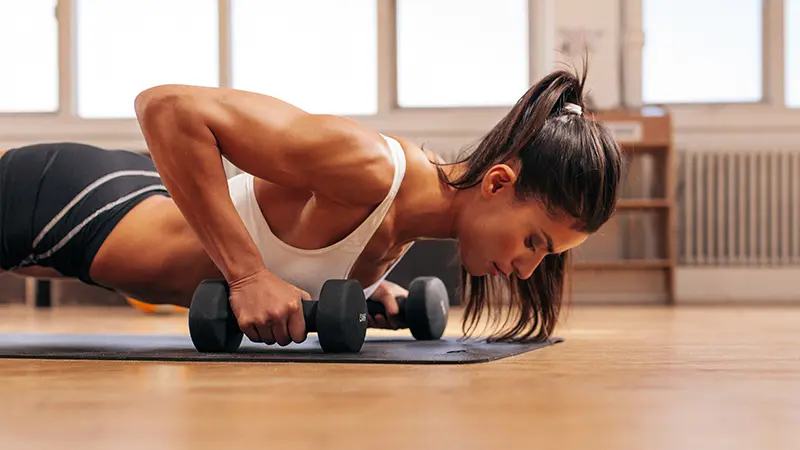
Best for: Beginners, home workouts without a bench, and controlled pressing strength
Sets: 3
Reps: 8–12
How to Do a Dumbbell Floor Press
- Sit on the floor with a dumbbell resting beside each thigh, then carefully roll onto your back while bringing the dumbbells into position.
- Bend your knees, place your feet flat on the floor, and hold the dumbbells above your chest with your palms facing forward or slightly inward.
- Brace your core, keep your shoulder blades stable, and position your elbows about 30–45 degrees away from your torso.
- Slowly lower the dumbbells until the backs of your upper arms lightly touch the floor.
- Pause briefly without relaxing your upper body or bouncing your arms against the floor.
- Press the dumbbells upward until your arms are extended, keeping your wrists stacked over your elbows.
- Lower the weights under control and repeat.
Why This Exercise Works
The dumbbell floor press strengthens the chest, triceps, and front shoulders while requiring minimal equipment. Because the floor limits how far your elbows can travel below your torso, the exercise uses a shorter range of motion than a traditional dumbbell bench press.
This reduced range can make the movement easier to control and may feel more comfortable for trainees who are still developing pressing technique. The independent dumbbells also require each arm to work separately, helping identify and gradually reduce strength imbalances.
Choose a weight that allows you to maintain stable wrists, controlled elbows, and smooth repetitions. Once you can complete every set at the top of the recommended rep range with proper form, gradually increase the weight or progress to a dumbbell bench press for a greater range of motion.
Dumbbell Chest Exercise: Dumbbell Chest Fly
Best for: Chest isolation, controlled stretching, and improving the mind-muscle connection
Sets: 3
Reps: 10–15
How to Do a Dumbbell Chest Fly
- Lie on a flat workout bench with a dumbbell in each hand. If a bench is not available, you can perform a shorter-range variation on the floor.
- Hold the dumbbells above your chest with your palms facing each other.
- Keep a slight, fixed bend in your elbows throughout the movement.
- Brace your core and gently draw your shoulder blades back to keep your shoulders stable.
- Slowly open your arms in a wide arc until you feel a comfortable stretch across your chest.
- Stop before your shoulders roll forward or the dumbbells drop below a controllable position.
- Contract your chest and bring the dumbbells back together over your chest using the same controlled arc.
Why This Exercise Works
The dumbbell chest fly is an isolation-focused movement that trains the pectoral muscles through horizontal arm adduction—the action of bringing your arms toward the center of your body. Compared with a pressing exercise, it places less emphasis on the triceps and allows you to focus more directly on chest control and muscle tension.
Performing the exercise on a bench provides a greater range of motion and a deeper chest stretch. A floor fly limits how far your upper arms can descend, which reduces the range of motion but may make the exercise easier to control for beginners.
Use lighter dumbbells than you would for a press, and avoid lowering the weights excessively. The goal is to maintain tension in the chest, not to force the shoulders into the deepest possible stretch.
Barbell Chest Exercise: Incline Bench Press
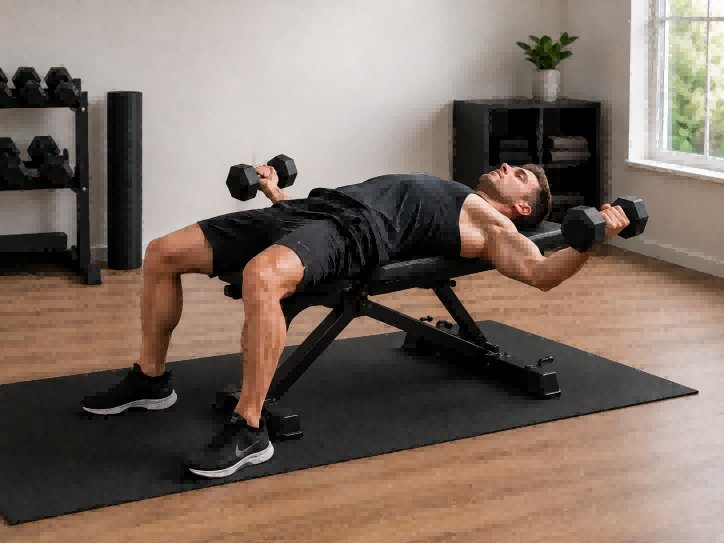
Best for: Upper-chest strength and overall pressing development
Sets: 3–4
Reps: 6–12
How to Do an Incline Barbell Bench Press
- Set an adjustable bench to a low or moderate incline and position it securely inside a power rack or bench press station.
- Adjust the safety arms so they can catch the bar if you are unable to complete a repetition. Use a spotter whenever possible.
- Lie back on the bench with your feet planted firmly on the floor.
- Grip the bar slightly wider than shoulder-width apart, keeping your wrists stacked over your forearms.
- Pull your shoulder blades back and down against the bench, lift your chest slightly, and brace your core.
- Unrack the bar with assistance from your spotter when needed, then hold it directly above your upper chest.
- Bend your elbows and lower the bar slowly toward the upper portion of your chest. Keep your elbows under control rather than flaring them directly outward.
- Lightly touch the bar to your chest only if you can maintain a stable shoulder position and comfortable range of motion.
- Press the bar upward and slightly back toward the rack until your arms are extended.
- Keep your feet firmly planted and your upper back stable throughout every repetition.
Why This Exercise Works
The incline bench press changes the pressing angle to place greater emphasis on the clavicular, or upper, portion of the pectoralis major. It also trains the front shoulders and triceps, making it an effective compound exercise for building upper-body strength and muscle.
A lower incline generally keeps more tension on the chest, while a steeper bench angle increases shoulder involvement. Choose an angle that allows you to feel your upper chest working without causing shoulder discomfort.
Because this exercise requires a barbell, weight plates, an adjustable bench, and a secure rack, it is best suited to a properly equipped home gym. Beginners should first learn pressing technique with lighter weights or dumbbells before progressing to heavier barbell training.
Build a More Effective At-Home Chest Workout with VIGFIT
An effective chest workout at home can build strength, muscular endurance, and upper-body control with little or no equipment. The key is to select exercises that match your current fitness level, train through different pressing angles, and perform every repetition with proper technique.
For continued progress, apply progressive overload gradually. You can increase the number of repetitions, add an extra set, slow down the lowering phase, choose a more challenging exercise variation, or use heavier resistance. When you can consistently complete the top of the recommended repetition range with good form, it may be time to increase the difficulty.
You can start with bodyweight exercises and gradually expand your home gym with dumbbells, an adjustable workout bench, barbells, weight plates, a power rack, or a functional trainer. The right equipment can provide more exercise options, make resistance easier to adjust, and support long-term progression.
Ready to build a stronger and more versatile home training setup?
Backed by more than 18 years of fitness industry experience, VIGFIT provides strength training equipment, functional training products, cardio equipment, and gym accessories for home gyms, retailers, fitness brands, distributors, and commercial fitness projects.
Explore VIGFIT fitness equipment and find the right products for your training needs, product range, or complete gym solution.
What Is the Best Chest Workout to Do at Home?
The best at-home chest workout combines exercises that match your fitness level and available equipment. A well-rounded routine may include standard push-ups, incline push-ups for an easier variation, decline push-ups for a greater upper-body challenge, and dumbbell presses or fly variations when weights are available.
Rather than trying to isolate every part of the chest with one exercise, focus on combining different pressing angles, using controlled technique, and gradually increasing the difficulty over time.
How Can I Target My Upper Chest at Home?
To place more emphasis on the upper portion of the chest, try decline push-ups with your feet elevated, incline dumbbell presses, or incline barbell bench presses.
When using an adjustable bench, a low-to-moderate incline usually keeps more tension on the chest. Setting the bench too steep may shift more of the workload toward the front shoulders.
Incline push-ups, where the hands are elevated, are generally better used as a beginner-friendly variation because they reduce the amount of bodyweight being lifted.
How Often Should I Train My Chest at Home?
Most people can train their chest one to three times per week, depending on their experience, training volume, intensity, and recovery. For broader health guidance, the CDC’s adult physical activity guidelines recommend muscle-strengthening activities for all major muscle groups, including the chest, on at least two days per week.
Beginners may start with one or two sessions per week. More experienced trainees can divide their total weekly volume across two or three sessions. Allow enough recovery time between demanding chest workouts, especially if you are still experiencing significant soreness or reduced pressing strength.
Can I Build My Chest at Home Without Weights?
Yes. Bodyweight exercises such as standard push-ups, incline push-ups, decline push-ups, wide push-ups, and tempo push-ups can effectively develop chest strength and muscular endurance.
As standard push-ups become easier, increase the challenge by adding repetitions, slowing the lowering phase, pausing at the bottom, elevating your feet, or progressing to more advanced variations.
Are Dumbbells Necessary for an At-Home Chest Workout?
Dumbbells are not essential, but they provide more resistance options and exercise variety. Dumbbell floor presses, bench presses, incline presses, squeeze presses, and chest fly variations can make progressive overload easier to manage.
Adjustable dumbbells are especially useful for home gyms because they provide multiple weight options while requiring less storage space than a full fixed-weight dumbbell set.
Do I Need a Workout Bench to Train My Chest at Home?
You can build chest strength without a bench by performing push-ups and dumbbell floor presses. However, an adjustable workout bench increases your exercise options and allows you to perform flat and incline pressing movements through a greater range of motion.
A stable bench can be a useful addition for home gym users who want to progress beyond basic bodyweight and floor-based exercises.
How Do I Make My Home Chest Workout More Difficult?
You can increase the difficulty by:
- Adding more repetitions or sets
- Using heavier dumbbells or resistance
- Slowing down the lowering phase
- Pausing at the most difficult point
- Increasing the range of motion
- Choosing a more advanced exercise variation
- Reducing rest periods gradually
Increase only one or two variables at a time so you can continue progressing without sacrificing proper form.